
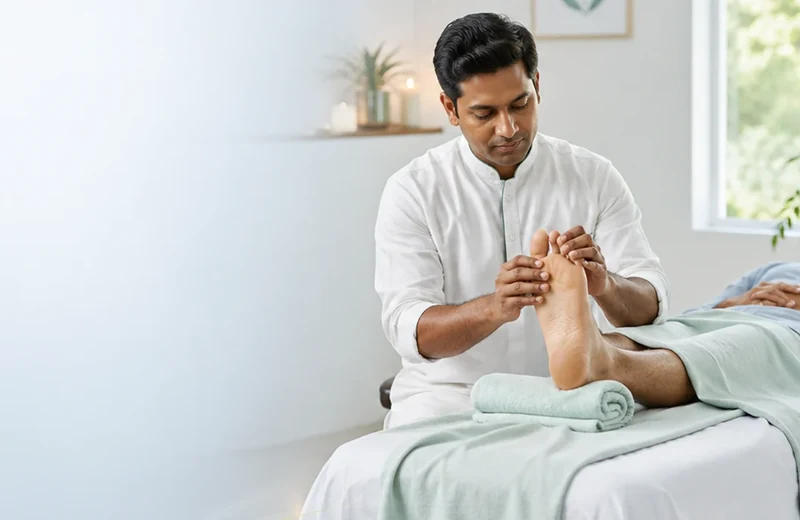
Nadipathy Through Nerves & Pressure Points
Explore nerve balance, pressure points, energy flow, and natural wellness support.
 5th Lane, Dwaraka Nagar, Visakhapatnam
 All Days - IST 10AM-2PM & 5PM-8PM
 +91 8333 939 234, 898 3636 234
A gentle guide to sound healing, how soothing vibrations may support stress relief, better sleep, emotional calmness, and mind-body relaxation.

Stress is not only a thought in the mind. It can show up as tight breathing, restless sleep, irritability, emotional heaviness, poor focus, and a body that never fully relaxes.
Sound healing is a supportive wellness therapy that uses soothing vibrations and rhythm to create a calming environment. It may support stress relief, better sleep, emotional wellness, and mind-body balance when practiced by a trained therapist.
Sound healing uses instruments such as singing bowls, sound bowls, gentle tones, and vibration to support relaxation. The therapist creates a calm sound environment while the patient rests comfortably.
People often explore sound healing for stress, sleep support, emotional balance, relaxation therapy, and mind-body wellness. It should be understood as supportive care, not a cure for mental illness or a replacement for medical or psychological treatment.
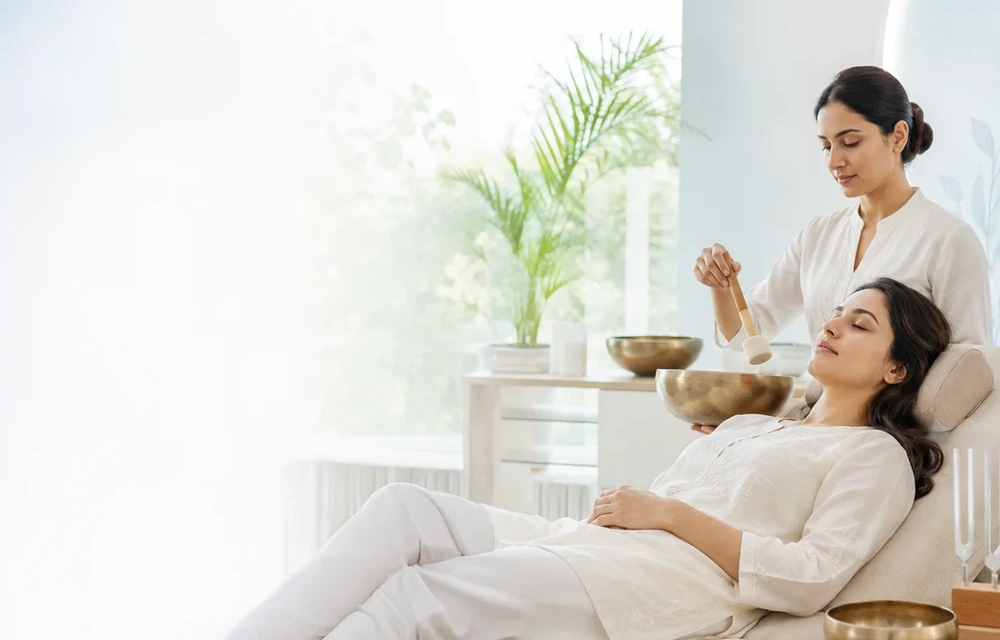
Soft, repeated sound patterns can create a predictable environment that helps some people slow their breathing, release tension, and shift into rest mode. This is why many people feel deeply relaxed during a sound healing session.
The goal is not to make exaggerated frequency claims. The practical benefit is the calm setting, soothing rhythm, mindful rest, and supportive therapist presence.
Sound healing for stress may support people who feel mentally overloaded, emotionally tense, or physically restless. A quiet session can help the body practice slowing down.
Sound healing for sleep may support better bedtime routines when paired with screen reduction, steady sleep timing, breathing practice, and medical guidance for persistent insomnia or anxiety.
Sound healing may be considered by people looking for relaxation support, emotional wellness, stress relief support, or a calm mind-body reset. It can be especially helpful for those who struggle to pause during busy routines.
A sound healing session should feel comfortable and optional. If certain sounds feel overwhelming, the therapist should adjust the intensity, distance, or session style.
Sound healing should not be promoted as a cure for depression, anxiety disorders, trauma, insomnia, or neurological conditions. It may support relaxation and emotional balance, but ongoing concerns need qualified medical or psychological care.
Some people feel calmer after one session, while others use sound healing as part of a broader wellness routine with sleep, therapy, movement, nutrition, and doctor-guided care.
You rest comfortably while the therapist uses singing bowls or soothing sound instruments at a gentle volume. The session is usually quiet, slow, and focused on relaxation rather than conversation.
Afterward, you may be encouraged to drink water, move slowly, notice your mood, and avoid jumping immediately into intense activity if you feel deeply relaxed.
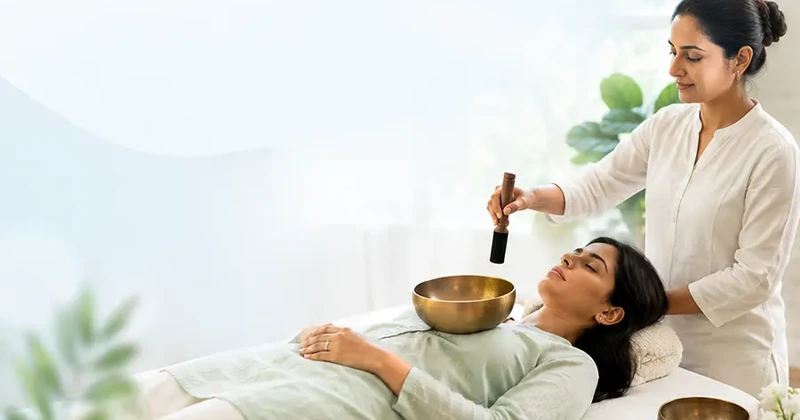
May support stress relaxation and emotional calmness
Creates a gentle space for mind-body balance
Best used as supportive wellness care, not a cure claim
Sound healing is a supportive wellness practice that uses soothing sounds and vibrations, such as singing bowls, to create a calm environment for relaxation.
Sound healing may support stress relaxation by helping the body slow down in a calm setting. It should not replace medical or psychological care for severe stress or anxiety.
Sound healing may support sleep by encouraging relaxation and a calmer bedtime routine. Persistent insomnia should be discussed with a qualified healthcare professional.
You usually rest comfortably while a trained therapist plays singing bowls or gentle sound instruments at a comfortable volume, then gives simple after-care guidance.
Not always. People with sound sensitivity, trauma, neurological conditions, severe anxiety, depression, or mental health concerns should consult a qualified professional first.
No. Sound healing is supportive wellness care and should not replace medical diagnosis, prescribed treatment, counseling, or emergency mental health support.
This article is for educational purposes only and should not replace professional medical advice, diagnosis, treatment, or psychological care. Please consult a qualified healthcare professional for persistent, severe, or unexplained symptoms.
Sparsa Homeocare offers supportive sound healing sessions focused on calmness, comfort, sleep support, and realistic mind-body wellness.